

Turkish coffee is brewed from very fine grounds, and products differ in grind, blend and added ingredients. This guide from Istanbul Bazaar Online compares Mehmet Efendi, Artukbey, Turkobaba, Nuri Toplar and Al Ameed from our shelves, separating plain grounds, dibek, blends and cardamom coffee, so you can match a product to how you brew.
- Mehmet Efendi Turkish Coffee is labeled as Turkish coffee. Do not confuse it with the brand's Colombian filter coffee.
- Artukbey Grounded Plain Dibek Coffee is a plain, ultra-fine dibek coffee.
- Nuri Toplar Ottoman Coffee lists cream among its ingredients, so compare it with other blends, not with plain coffee.
- Check the ingredient list on the package before you buy a blend.
Why this matters
Türk kahvesi means Turkish coffee. It describes a preparation in which very finely ground coffee heats with water in a small pot called a cezve and reaches the cup without filtration. The grounds settle at the bottom; you leave that sediment behind.
A familiar brand name does not tell you everything. A company can sell Turkish coffee, filter coffee, instant coffee, and flavored mixes under the same name. Choose the preparation first, then the brand. Otherwise, you risk comparing products intended for different drinks.
What to look for in Turkish coffee
Use these criteria when choosing your coffee in 2026:
- Preparation match: Look for Turkish coffee or explicit cezve instructions, rather than assuming every ground coffee belongs in a small pot.
- Grind information: Traditional Turkish coffee requires a powder-fine grind. An explicit ultra-fine description removes one source of uncertainty.
- Ingredient clarity: Plain coffee, cardamom coffee, and blends with cream or other ingredients belong in separate taste categories.
- Useful pack size: Choose a quantity you can keep tightly closed and use regularly, rather than opening a large pack without a storage plan.
- A clear purpose: A first purchase, a plain dibek coffee, and a flavored change of pace should not compete for the same recommendation.
The list below follows those distinctions. It is a buying guide based on the stated product types, ingredients, and preparation information—not a blind-tasting scorecard.
Turkish coffee brands at a glance
| Coffee | Good for | Standout detail | Key limitation |
|---|---|---|---|
| Mehmet Efendi Turkish Coffee | A straightforward first purchase | Explicitly identified as Turkish coffee; linked pack is 500 g | Do not confuse it with the brand's Colombian filter coffee |
| Artukbey Grounded Plain Dibek Coffee | Plain, ultra-fine dibek | Described as stone-mortar-ground and ultra-fine | Requires brewing; not an instant substitute |
| Turkobaba Professional Traditional Dibek Coffee Blend - 200 g | A dibek blend with explicit cezve instructions | Product description specifies brewing in a cezve | The supplied description does not list the blend's ingredients |
| Nuri Toplar Ottoman Coffee 250 g | A multi-ingredient alternative | Contains coffee, cream, salep, chocolate, carob, gum mastic, and pistacia terebinthus | Not a plain-coffee comparison |
| Al Ameed Medium Roasted Ground Coffee with Cardamom 250 g | Medium-roast coffee with cardamom | Roast level and cardamom are explicitly named | A cardamom alternative, not a plain Turkish coffee default |
1. Mehmet Efendi: a first purchase
Mehmet Efendi Turkish Coffee suits you when you want to start with the named Turkish coffee preparation rather than a specialty blend. The linked product is a 500 g pack. Mehmet Efendi also appears as the main coffee in the Türk Kahvesi Box described by Istanbul Bazaar Online.
Read the full product name. Mehmet Efendi Colombian Filter Coffee is a separate product, and the shared brand name does not make filter coffee interchangeable with Turkish coffee.
Mehmet Efendi Turkish Coffee pros:
- Clearly identified as Turkish coffee.
- Gives beginners a direct starting point before exploring dibek or flavored blends.
- The 500 g format suits a household that brews regularly.
Mehmet Efendi Turkish Coffee cons:
- A 500 g pack needs a sensible storage plan if you brew infrequently.
- Choosing by brand alone risks confusing Turkish coffee with another preparation in the range.
Good for: Your first traditional Turkish coffee purchase, especially when you want to learn the method before comparing specialty styles.
Verdict: choose it if you want a coffee labeled as Turkish coffee.
2. Artukbey: plain, ultra-fine dibek
Artukbey Grounded Plain Dibek Coffee is described as coffee ground in a traditional stone mortar and pestle, called a dibek. Its description explicitly identifies the coffee as plain and ultra-fine. Those details give you a more useful buying signal than the word traditional alone.
Dibek names a mortar-associated coffee tradition, but the word does not guarantee identical ingredients across brands. Artukbey's plain description matters if you want to explore dibek without deliberately choosing a multi-ingredient Ottoman blend.
Artukbey Grounded Plain Dibek Coffee pros:
- Explicitly described as ultra-fine.
- Identified as plain dibek coffee.
- The description explains the mortar-and-pestle connection.
Artukbey Grounded Plain Dibek Coffee cons:
- Ground coffee requires preparation rather than simply dissolving in water.
- The dibek name alone does not tell you the roast level or predict your preferred flavor.
Good for: Drinkers who specifically want plain dibek coffee with clearly stated grind information.
Verdict: choose it if you want plain, ultra-fine dibek.
3. Turkobaba: a cezve-ready dibek blend
Turkobaba Professional Traditional Dibek Coffee Blend comes in a 200 g pack. Its description specifically says to brew it in a cezve, making the intended preparation clear.
The important distinction is the word blend. Check the package ingredient list before treating Turkobaba as equivalent to plain coffee, particularly when avoiding specific ingredients or buying for someone else.
Turkobaba Professional Traditional Dibek Coffee Blend pros:
- Explicit cezve preparation guidance.
- Clearly identified as a dibek coffee blend.
- A 200 g pack gives you a smaller quantity than the linked 500 g Mehmet Efendi pack.
Turkobaba Professional Traditional Dibek Coffee Blend cons:
- The supplied description does not specify the complete ingredient list.
- It is not the clearest choice when your requirement is explicitly plain coffee.
Good for: Home brewers seeking a dibek blend with a stated small-pot brewing method.
Verdict: choose it if you want a dibek blend, and check the package for the ingredients.
4. Nuri Toplar: a layered blend
Nuri Toplar Ottoman Coffee is a 250 g blend containing coffee, cream, salep, chocolate, carob, gum mastic, and pistacia terebinthus. That ingredient list makes it a different proposition from plain ground coffee. Choose it because you want those additions, not because Ottoman automatically means a better version of Türk kahvesi.
Nuri Toplar Ottoman Coffee is also the clearest example here of why ingredient reading matters. Cream is explicitly listed, so this is not the choice for someone avoiding dairy.
Nuri Toplar Ottoman Coffee pros:
- The supplied description names the blend's ingredients.
- Offers an alternative to plain coffee through explicitly listed additions.
- Comes in a 250 g pack.
Nuri Toplar Ottoman Coffee cons:
- Contains cream and is unsuitable for a dairy-free requirement.
- Multiple added ingredients make it unsuitable for isolating the taste of plain coffee.
Good for: Drinkers deliberately seeking an Ottoman coffee blend with chocolate, mastic, and other additions.
Verdict: choose it if you want a multi-ingredient blend.
5. Al Ameed: medium roast with cardamom
Al Ameed Medium Roasted Ground Coffee with Cardamom comes in a 250 g foil pack. The name tells you both the roast category and the added spice. It belongs in this guide as a cardamom alternative, not as evidence that all regional coffee styles are the same.
Choose Al Ameed Medium Roasted Ground Coffee with Cardamom when cardamom is part of the drink you want. Follow its package preparation directions instead of assuming every regional ground coffee uses an identical recipe.
Al Ameed Medium Roasted Ground Coffee with Cardamom pros:
- Medium roast is explicitly identified.
- Cardamom is clearly named rather than hidden behind a general flavor description.
- The 250 g format provides a defined pack size for planning storage.
Al Ameed Medium Roasted Ground Coffee with Cardamom cons:
- Cardamom prevents a like-for-like comparison with plain coffee.
- It is not the default recommendation for learning an unflavored Turkish coffee preparation.
Good for: Drinkers who already know they want medium-roast ground coffee with cardamom.
Verdict: choose it if you want cardamom in your coffee.
Which specialty coffee should you try next?
After choosing between plain dibek and a multi-ingredient blend, compare the products below. These Istanbul Bazaar Online Turkish coffee options serve different purposes; the ingredient list should decide your next purchase, not the most elaborate product name.


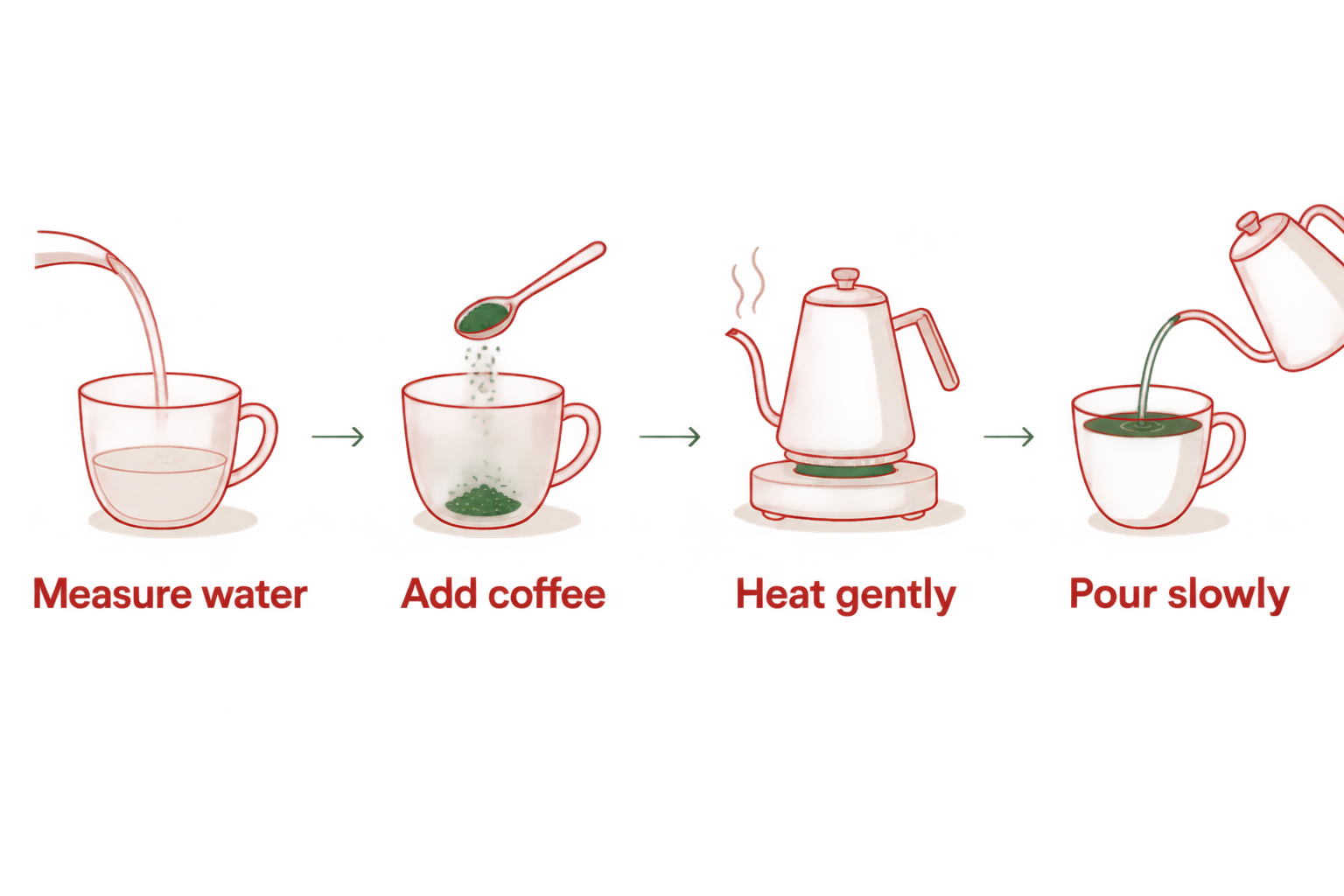
How to brew a useful first comparison
For your 2026 home comparison, keep the preparation consistent and change the coffee rather than everything at once. Use the same cup, water measure, pot, and sweetness preference when comparing plain coffees. Follow separate package instructions for blends.
- Measure water: Use your serving cup to measure the water into the cezve, leaving room in the pot for rising foam.
- Add coffee: Follow the package quantity guidance. Add sugar before heating if that is how you want the finished cup.
- Heat gently: Watch the surface as foam rises. Remove the pot from the heat before it boils over.
- Pour slowly: Transfer the coffee carefully, then let the fine grounds settle before drinking.
These steps describe the basic small-pot method, not a replacement for a particular blend's directions. Instant coffee follows a different process because it dissolves; traditional ground coffee leaves sediment.
Do not use foam alone as your quality score. Coffee choice and preparation both affect the result, and a cup that boils over tells you more about heat control than the brand name.
Serve without disturbing the grounds
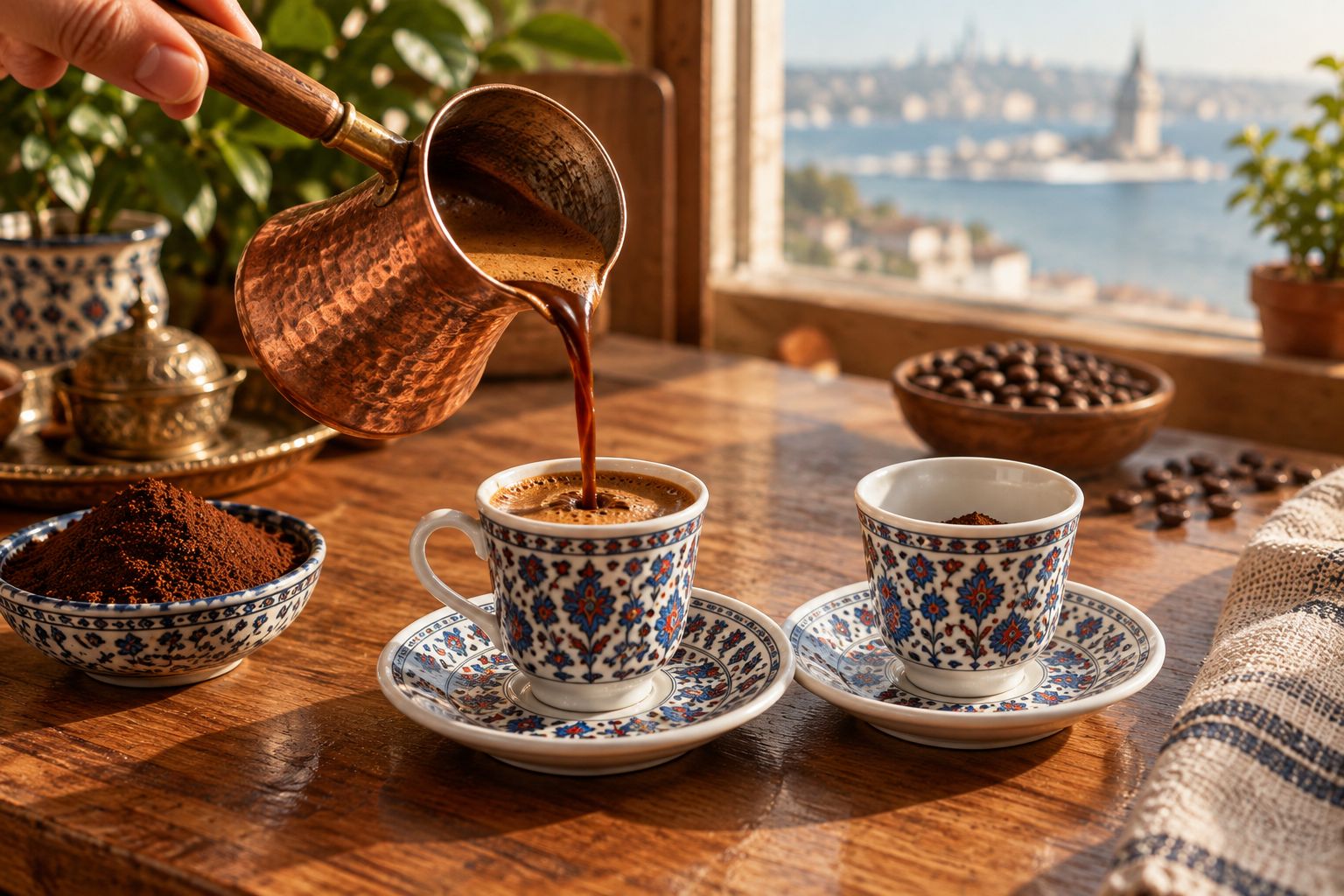
A cezve is the brewing pot; a fincan is the small serving cup. Pour carefully and stop drinking before reaching the sediment. Stirring the finished cup brings settled grounds back into the drink.
How this 2026 guide is organized
Mehmet Efendi is listed first because the named product directly matches Turkish coffee. Artukbey is listed for plain dibek because its description states both plain and ultra-fine. Turkobaba has a separate entry through explicit cezve instructions for a dibek blend.
Nuri Toplar and Al Ameed answer different preferences: a multi-ingredient Ottoman blend and medium-roast cardamom coffee. The list separates buying purposes; it does not claim a measured flavor result. Pack size informs the decision but does not establish freshness or quality by itself.
Which Turkish coffee should you choose?
Choose Mehmet Efendi Turkish Coffee if you are undecided. Learn the basic preparation with a clearly named Turkish coffee before introducing more variables.
For a 2026 specialty purchase, choose Artukbey Grounded Plain Dibek Coffee for plain ultra-fine dibek, or Nuri Toplar Ottoman Coffee for its listed additions. Keep opened coffee tightly closed, away from heat, moisture, and strong odors, and follow the package storage instructions.
FAQ
Which Turkish coffee brand suits a beginner?
Mehmet Efendi Turkish Coffee suits a beginner because the named product directly matches the preparation. Choose its Turkish coffee rather than assuming the brand's filter coffee is interchangeable.
Is dibek coffee the same as regular Turkish coffee?
Dibek coffee is not automatically identical to plain Turkish coffee. Dibek refers to a mortar-associated tradition, and products bearing the name differ in ingredients; check the individual package.
Which coffee here is explicitly described as ultra-fine?
Artukbey Grounded Plain Dibek Coffee is explicitly described as ultra-fine and plain. Its description also identifies traditional stone-mortar-and-pestle grinding.
Does Nuri Toplar Ottoman Coffee contain dairy?
Nuri Toplar Ottoman Coffee lists cream among its ingredients. Do not choose this blend for a dairy-free requirement, and read the package for the complete ingredient and allergen information.
Is cardamom required in Turkish coffee?
Cardamom is not required in Turkish coffee. Choose Al Ameed Medium Roasted Ground Coffee with Cardamom when you specifically want that spice rather than a plain-coffee comparison.
Can I replace Turkish coffee grounds with instant coffee?
Instant coffee does not reproduce the traditional unfiltered preparation. Instant coffee dissolves in water, while traditional Turkish coffee uses fine grounds that settle in the cup.
Should I drink the grounds at the bottom of Turkish coffee?
Leave the settled grounds at the bottom of the cup. Pour carefully, allow the sediment to settle, and avoid stirring the finished drink.
Where can I buy Turkish coffee with other Turkish groceries in the US?
Istanbul Bazaar Online is an online Turkish grocery store shipping from New York to customers across the US. Its grocery range includes coffee, tea, olives, spreads, and dairy.
One last thing
The most useful check is not the largest word on the package. It is the preparation and ingredient information: Turkish coffee, filter coffee, instant coffee, and Ottoman blends describe different purchases even when they share a brand name. For your next comparison, change the coffee—not the entire brewing routine.


